
AI development is changing at a rapid pace. What doesn’t work today will work tomorrow but might not work the day after.
A deceptively simple question has recently gone viral, exposing a critical weakness in even the most advanced AI models.
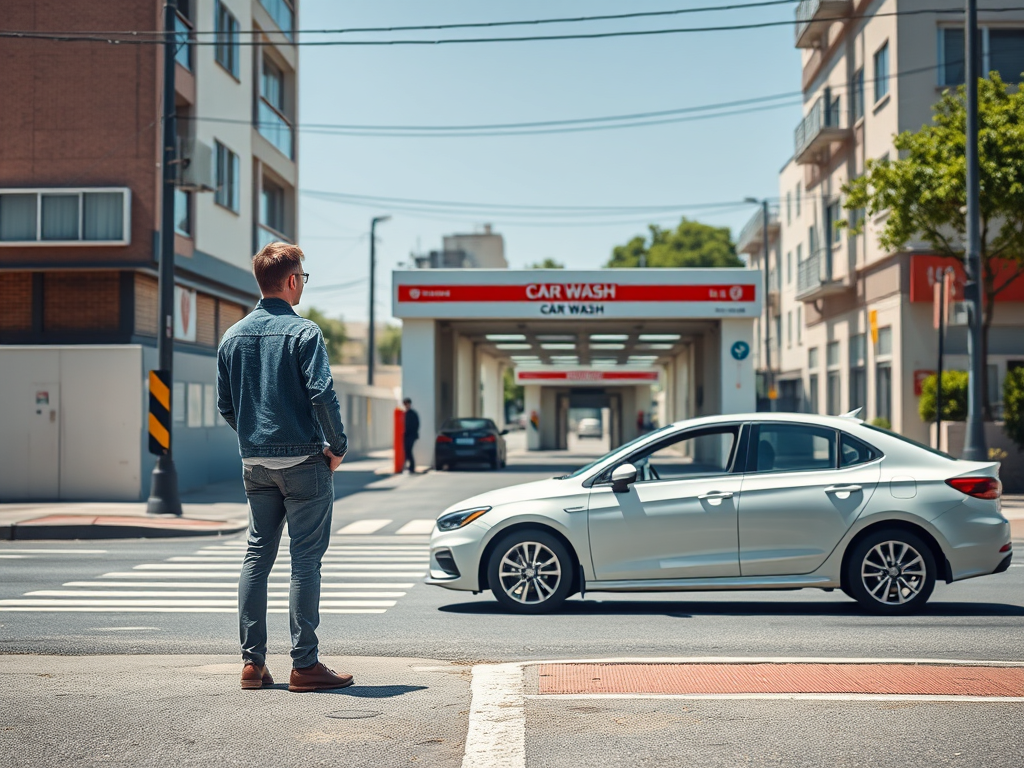
“I want to wash my car and the car wash is just 50 meters away. Should I start my car and drive there or just walk?”
The correct answer seems obvious to most humans: you need to drive because the car must be at the car wash to get cleaned. Yet this straightforward logic puzzle has stumped the majority of major AI models, including ChatGPT, Claude, DeepSeek, Qwen, Kimi, and others.
Read more: Car Wash Test: AI’s Benchmarks Meet Basic Common SenseWhat Makes This Test Viral
The Car Wash Test has emerged as a viral benchmark because it requires genuine understanding of physical causality and goal-oriented reasoning. Most AI models failed by fixating on the distance metric, concluding that 50 meters is short enough to walk, thereby optimizing for efficiency rather than task completion.
LLMs don’t reason about physical reality, they predict likely word sequences. When training data associates “50 meters” with “should I drive or walk,” the statistical pattern points toward “just walk.” The result is confident, and completely wrong.
The Winners and Losers
According to recent testing results found publicly on internet, only a handful of models consistently passed: Gemini and Grok were among the standouts. Some people pointed out that Gemini reasoned, “the car needs to BE at the car wash with you. Walking gets YOU there but your car stays dirty at home.” Grok similarly understood you should “drive the 50 meters to get the car there, wash it, then drive back.” ChatGPT suggested walking, reasoning that “there’s no need to overcomplicate simple matters.” Qwen recommended walking, citing the short distance, resource savings, and avoiding parking hassles. DeepSeek provided similar reasoning about environmental friendliness and resource efficiency. All missed the fundamental point.
I increased the distance to 125 meters on the free models.


And I found no right answers in the three images above. Though Gemini( free version) mentioned in the end:
” Walk it first. Since it’s so close, walk over to see if there is a line. There is nothing worse for a car than starting it up, driving 125 meters, and then sitting in a stationary line for 20 minutes while the engine struggles to reach operating temperature.
The Exception: If you are actually going there to perform the wash right now, you obviously have to bring the car. In that case, take the “long way” around the block. Give the engine at least 5–10 minutes to circulate the oil and warm up before you shut it off at the wash bay.”
Why This Matters
The Car Wash Test exposes a gap between benchmark performance and real-world reasoning. This has implications for enterprise AI deployment. When such failures happen in production systems( If you have worked in enterprise finance you know the context) they become expensive mistakes rather than lighthearted tests. The situation underscores why verification and careful monitoring remain essential.
The Trust and Safety Problem
Organizations deploying AI for customer service, healthcare navigation, or operational decisions face a critical challenge: how do you know when your AI will fail? Traditional testing focuses on technical metrics: accuracy rates, latency, throughput. But the Car Wash Test reveals that models can pass every technical benchmark while missing fundamental aspects of common sense.
Consider a virtual assistant helping someone plan their day. If it can’t understand the physical constraints of getting a car washed, what else might it miss? Could it suggest mailing documents that need wet signatures? Recommend video calls for tasks requiring physical presence? The failure mode is the blind spots in understanding how the physical world actually works.
Beyond Pattern Matching to True Understanding
The test highlights a logical question about what we’re building. Current AI operates on statistical associations: “50 meters” correlates with “walking distance” in training data, so the model defaults to that pattern. But human intelligence involves mental models of causality, agency, and goals. When we predict likely responses, we also simulate outcomes, understand intentions, and reason backward from desired end states.
This distinction matters enormously as we move toward more autonomous systems. An AI scheduling assistant that can’t reason about physical constraints could actively waste time and resources. A logistics AI that misunderstands why things need to be in specific places could optimize for the wrong variables entirely.
The Governance Gap
The Car Wash Test also exposes inadequacies in current AI evaluation frameworks. We have built systems to test language fluency, mathematical reasoning, and knowledge recall. Yet we lack robust methods for assessing whether models understand basic goal-oriented reasoning.
Regulators and risk managers need ways to assess whether AI systems are safe for specific applications. But if our evaluation methods cannot catch failures this fundamental, how can we certify AI for high-stakes decisions? The test suggests we need entirely new categories of assessment focused on common sense, contextual awareness, and practical reasoning.
The viral spread of this test reflects growing public awareness that impressive AI capabilities don’t equal reliability. We are essentially deploying advanced autocomplete systems into contexts that require genuine understanding. Until AI can pass not just complex benchmarks but simple sanity checks like the Car Wash Test, we must maintain appropriate skepticism and human oversight.
The test also highlights that model size and training data don’t guarantee common sense. Context awareness and goal comprehension matter more than raw computational power. As AI systems become more integrated into workflows, understanding what users are actually trying to accomplish, not just answering literal questions, becomes extremely important.
At the end lets remember we are dealing with probabilistic simulations of intelligence, not actual understanding. The AI systems must grasp both the question asked and the underlying objective. Until then we would better remember to bring the car.
Leave a Reply